
Matter Intelligence for Small Law Firms
Core Reads the Whole File and Flags What's Missing
Core reads the full record, builds the chronology, and flags the gaps and contradictions. You approve every finding, and your data never trains anyone's model.
The Cost of Switching Context
Stop Rebuilding the Facts in Your Head
You didn't go to law school to reread the same file twice. But every time a matter goes quiet or you switch between cases, the first twenty minutes are gone just getting the facts back. The record grows, the deadline doesn't move, and the fact that undercuts your case is the one you find last.
- You reread what you already read. The same pleadings, correspondence, and records get reread every time you prepare a timeline, draft a response, or send discovery.
- Quiet matters go cold. When a matter sits for a few weeks, getting back up to speed means digging through documents you already reviewed.
- Handoffs become restarts. At best, the facts live in whoever read the file last. When work changes hands, the next person has to reconstruct the case before moving it forward.
What Core Does
The AI That Reads the Whole File So You Never Reread It Twice
Reads the Entire Record
Upload the file, however many pages. Core reads all of it, not a sample, and pulls out the people, dates, events, and facts.
Helps Build the Case
A chronology from the record, contradictions between accounts flagged, and the gaps your case theory may not support surfaced before the other side finds them.
Generates Work Product
A clear list of what discovery still needs, drafts that reflect the actual facts of your matter, and tasks your team can act on.
Core by Catapult
Start Every Task With the Facts Already Pulled
Core works from the record of each matter, so every chronology, discovery list, draft, and answer starts from the facts of your case, not a blank prompt.
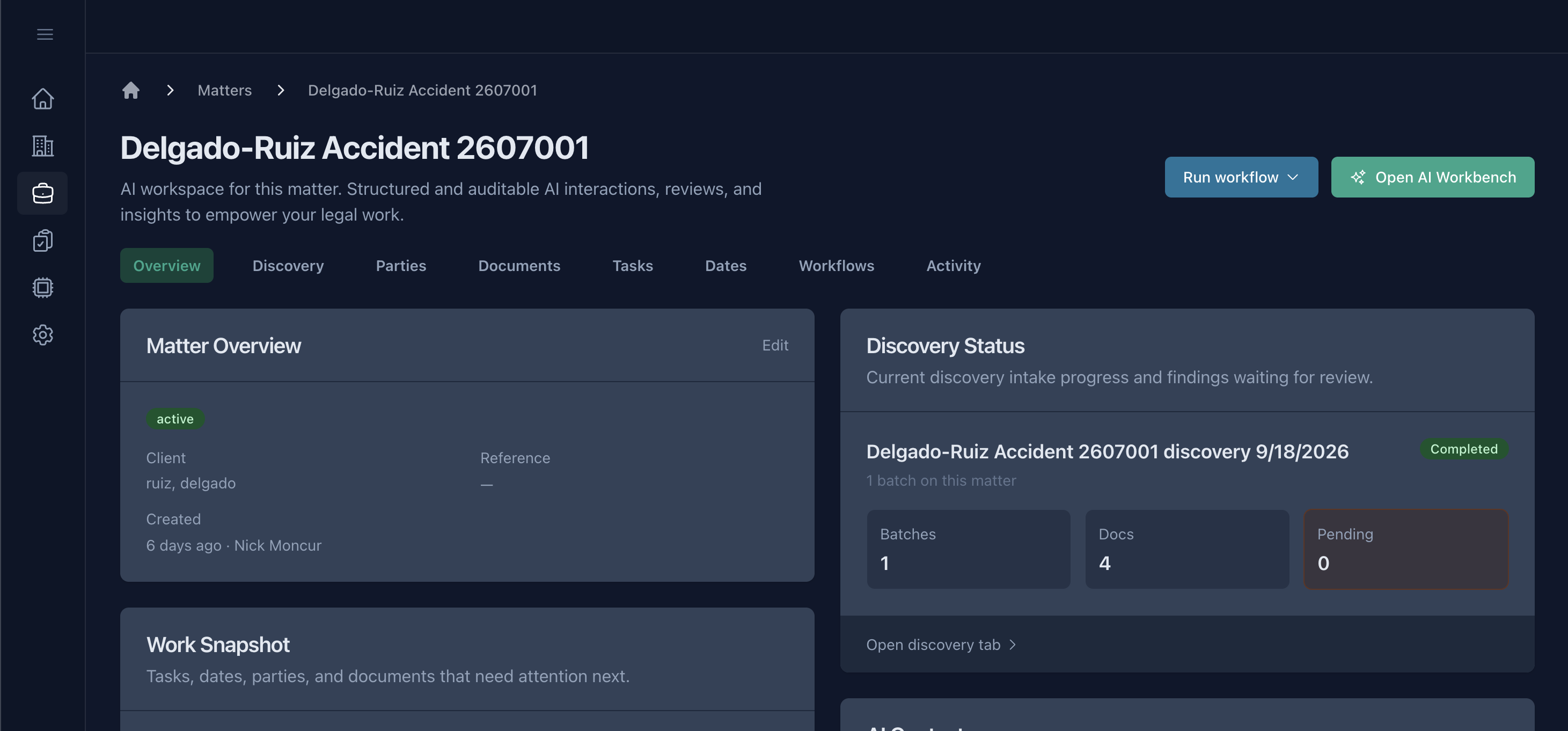
- Chronology from the record.
- Every date and event pulled into a timeline, each linked back to the document it came from.
- Contradictions and gaps flagged.
- See where accounts disagree and which parts of your case theory still lack documentary support.
- Know what discovery still needs.
- Before you send discovery, get a clear list of what you still need to find out.
- Drafts grounded in the facts.
- Generate drafts that reflect the actual record of your matter, ready for your review.
- Chat that knows the case.
- Ask questions and compare statements with the matter already in context, not a blank prompt.
- Workflows that do the busywork.
- Automated AI workflows generate tasks and put AI to work on the matter while you focus on the legal judgment.
Built for Your Practice
Pick Any Matter Back Up in Minutes Not an Afternoon
Civil & Commercial Litigation
- Find the facts that undercut your case before opposing counsel builds on them.
- Switch files without rebuilding the facts in your head.
Contested Divorce
- Before you send discovery, get a clear list of what you still need to find out.
- Know which parts of your case theory still lack documentary support.
Association Law
- When a matter goes quiet, get back up to speed without rereading documents you already reviewed.
- Let AI comb through pages of CC&Rs, bylaws, and dry association policy, flagging the provisions that bear on the dispute.
Getting Started
Be Up and Running in as Little as 10 Minutes
Core is built for firms that don't have time for a lengthy implementation. Create a matter, upload files, and start reviewing findings in your first session.
Create a Firm Account
Set up your firm workspace in a few minutes. No consulting engagement or technical implementation required.
Create Your First Matter
Add the matter name, client, and what you already know. Start with one active case, then bring the rest of your caseload over time.
Upload the File
Pleadings, transcripts, correspondence, records: however many thousands of pages. Core reads all of it.
Review What Core Finds
Check each finding against its source, then accept, edit, or dismiss it before your team treats it as fact.
No consulting engagement. No months-long rollout. No need to reorganize your entire firm before Core becomes useful.
You Stay in Control
Built for How Lawyers Can Actually Leverage AI
You do the lawyer work. Core handles the rest: reading the record, building the chronology, flagging what's missing. And nothing counts until you approve it.
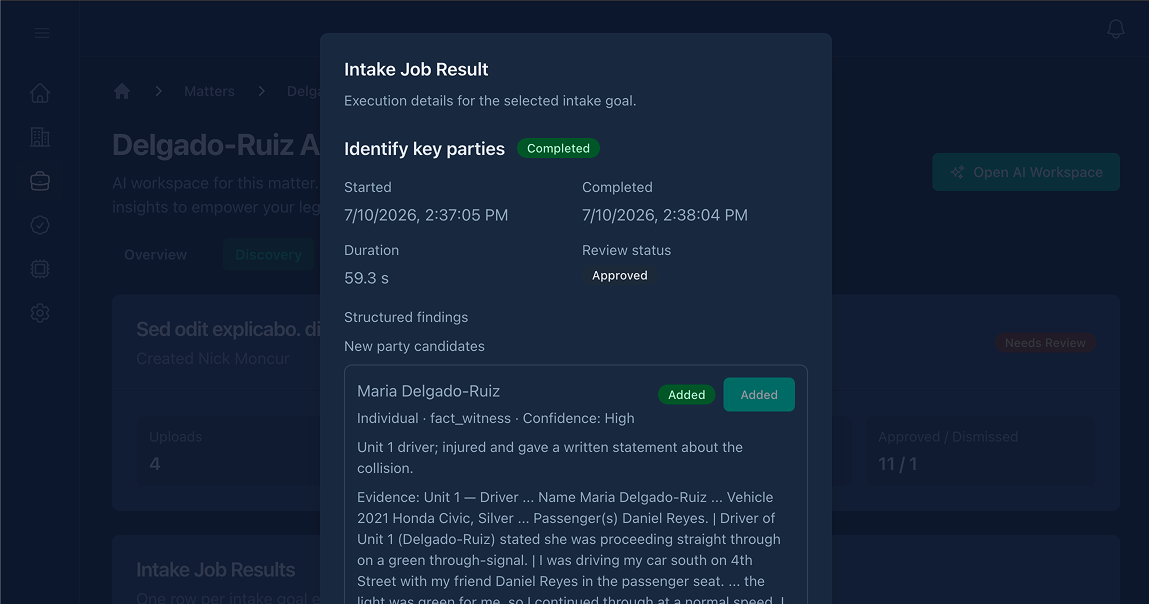
- You approve every finding.
- Nothing Core proposes becomes fact for your team until you accept, edit, or dismiss it.
- Every answer shows its source.
- Findings and answers link to the passage in the record they came from, so you can verify in one click.
- Your data never trains anyone's model.
- Your files stay private to your firm, under your firm's policies and permissions.
Common Questions
Answers Before You Ask
Is firm or client data used to train AI models?
No. Your data never trains anyone's model. Your firm, client, and matter information is processed only to provide Core's services and stays isolated to your firm's workspace.
How do I know I can trust what Core finds?
Every finding and answer links to the source passage in the record, so you can verify it in one click. Nothing Core proposes becomes fact for your team until you accept, edit, or dismiss it.
Is it worth it once I check its work?
That is the right test. Core reads the whole file and does the chronology, cross-checking, and gap-finding up front. Book a demo to see how source-linked findings support your review workflow.
How is Core different from ChatGPT or Claude?
A general chatbot starts every conversation from a blank prompt. Core works from the record of each matter: it reads the whole file, keeps the chronology and reviewed facts in place, links every answer to its source, and carries that context into discovery, drafting, and every conversation after.
How long does it take to get started?
Most firms are up and running in as little as 10 minutes. Create your firm account, add one active matter, upload the file, and start reviewing findings without an implementation project, data migration, or IT help.
Does Core replace attorneys, paralegals, or assistants?
No. You do the lawyer work; Core handles the rest. It cuts the rereading, fact rebuilding, and document busywork, while legal review, judgment, and final decisions stay with your firm.
Stop Rebuilding the Facts in Your Head
See what Core pulls from one of your own cases: the chronology, the contradictions, and the gaps your case theory can't support yet. You approve every finding, and your data never trains anyone's model.